Poker Format Preferences Vary Significantly Across Online Gaming Regions
Written by Logan Sullivan · Sep 13, 2026
Poker Format Preferences Vary Significantly Across Online Gaming Regions
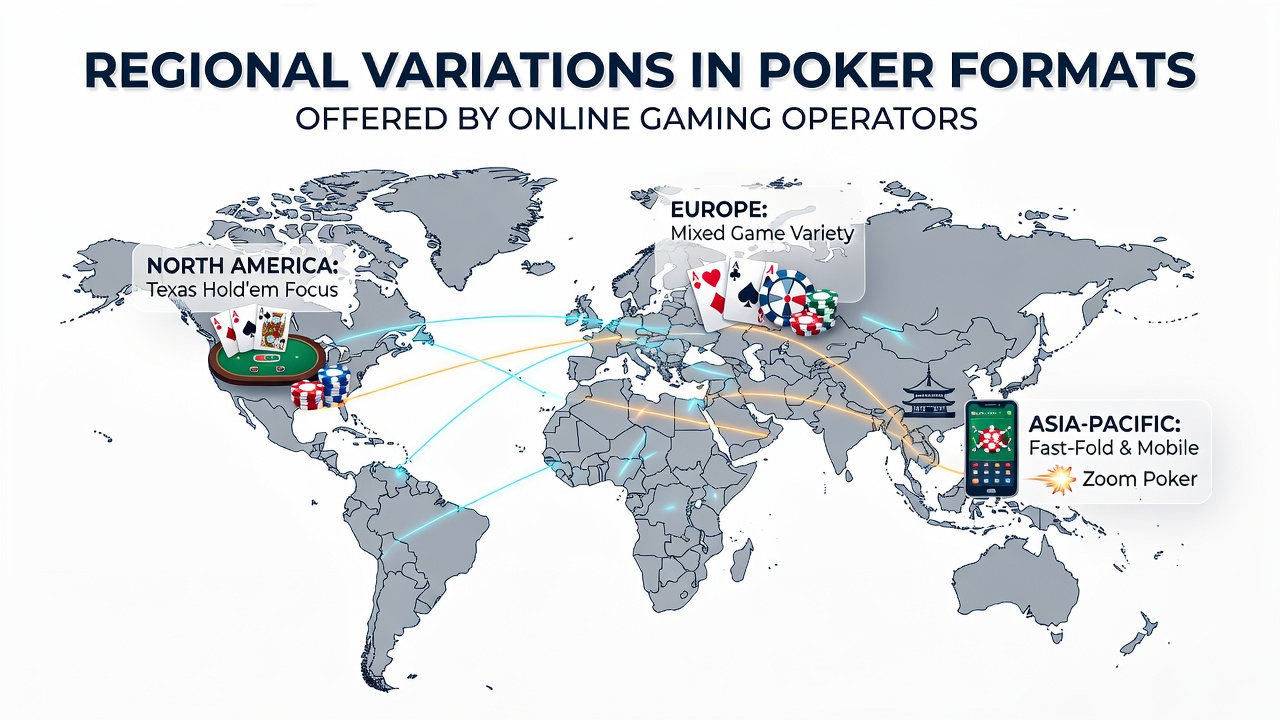
Online gaming operators tailor their poker offerings to match local regulations, player habits, and cultural preferences, which creates distinct patterns across continents and countries, and data from industry reports shows these adaptations often determine which formats gain traction in specific markets.
North American Platforms Emphasize Hold'em and Stud Variants
Operators serving North American players typically prioritize No-Limit Texas Hold'em alongside Seven-Card Stud and Pot-Limit Omaha because regulatory frameworks in states like New Jersey and Pennsylvania, along with Canadian provinces, support these established games, while figures from the Canadian Gaming Association indicate that Hold'em accounts for the majority of online traffic in those jurisdictions during peak months such as September 2026. Multi-table tournaments featuring these formats run regularly on licensed sites, and players often encounter mixed-game rotations that include Razz or HORSE to retain experienced participants who seek variety within the same session.
European Markets Favor Pot-Limit and Short-Deck Options
European operators integrate Pot-Limit Omaha and emerging short-deck variants more frequently than their North American counterparts because player data compiled by the European Gaming and Betting Association reveals higher engagement rates for these formats in countries such as Germany, France, and the Netherlands, where rules permit faster-paced tables and lower buy-in structures. Observers note that many platforms blend these games with traditional Hold'em cash tables to accommodate both casual users and those who prefer strategic depth, and this approach helps maintain session lengths across different time zones.
Asian and Australasian Sites Highlight Regional Innovations
Platforms targeting players in Asia and Australia introduce formats such as Chinese Poker, Open-Face Chinese, and localized versions of Pineapple Hold'em because licensing bodies in markets like Australia require operators to offer culturally resonant options alongside global standards, and reports from the Australian Gambling Research Centre confirm that these variations attract steady participation from regional audiences. Operators in these areas often combine standard tournaments with rapid-fire sit-and-go events that incorporate local rules, which allows them to differentiate their lobbies from competitors while complying with varying tax and advertising guidelines.
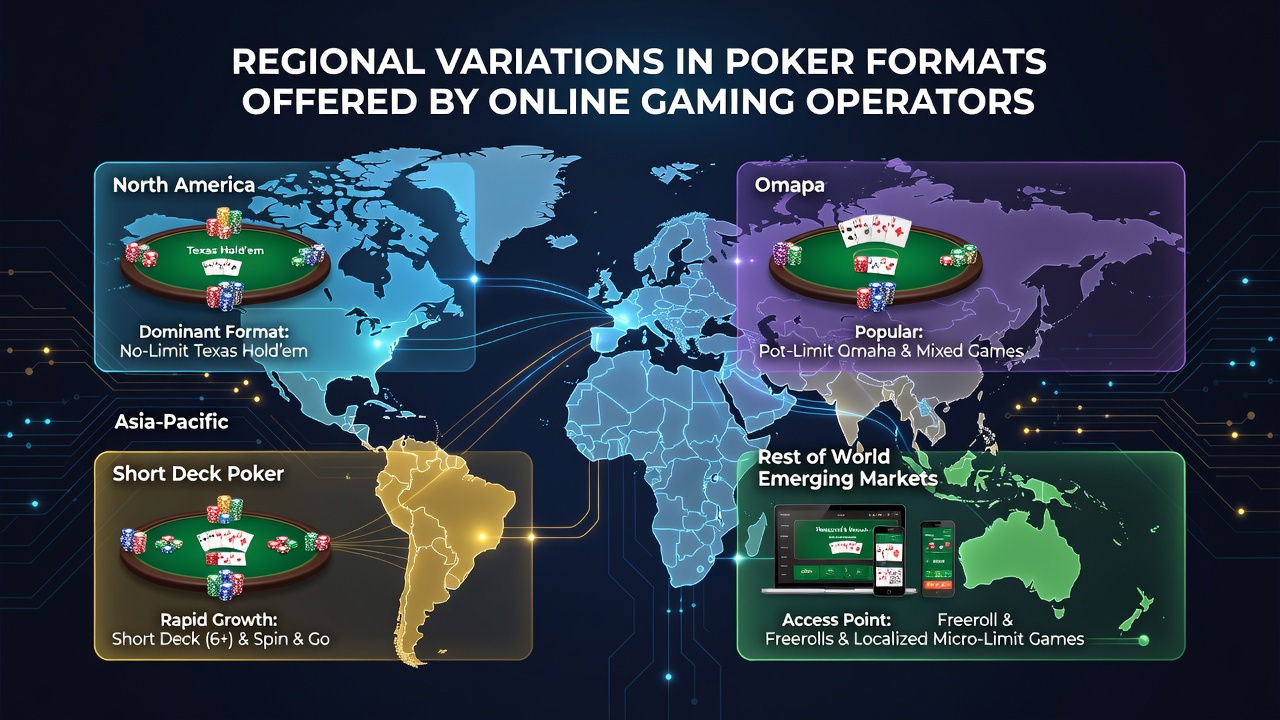
What's interesting is how these regional preferences influence software development, since providers create modular game engines that let operators activate or disable specific variants based on the user's location, and this flexibility reduces development costs while meeting compliance demands in multiple jurisdictions simultaneously.
Regulatory Influences Drive Format Availability
Government policies directly affect which poker types appear on licensed platforms, with some regions restricting certain betting structures or mandating minimum rake caps that favor particular game speeds over others, and those who've examined regulatory filings note that operators adjust their catalogs accordingly to avoid penalties. In markets where online poker falls under broader gambling legislation, formats like Five-Card Draw or lowball games surface more often because they align with historical casino offerings that regulators already understand.
Cross-Border Trends and Emerging Formats
Despite these differences, some formats cross regional boundaries through shared software providers, allowing players in one area to access games popular elsewhere during international tournaments or shared liquidity pools, and data compiled in September 2026 showed increased adoption of hybrid games that combine elements from multiple traditions. Industry organizations track these shifts through aggregated player metrics, which reveal that operators who offer both core regional favorites and selective global options tend to sustain longer user retention across diverse demographics.
Conclusion
Regional variations in poker formats offered by online gaming operators reflect a combination of regulatory environments, established player preferences, and technological capabilities that continue to evolve, and stakeholders monitor these patterns through ongoing data collection from licensed markets worldwide. As platforms expand, the ability to customize offerings by location remains a key operational factor that shapes how different poker experiences reach players in each area.